
Silk vs Grid Cloth: Full, Half and Quarter Explained (2026)
By MS Bollywood Film Equipments, Mumbai ·
Silk and grid cloth both soften light, but they do it differently. Silk is a light, fine fabric that softens a light while keeping some of its direction, so shadows stay gentle but present. Grid cloth is a heavier woven fabric with a reinforcing grid; it spreads the light more widely for a flatter, more wrapping look, and it stands up better to wind and outdoor use. Full, half and quarter describe how dense the fabric is: full diffuses most and cuts the most light, quarter the least.
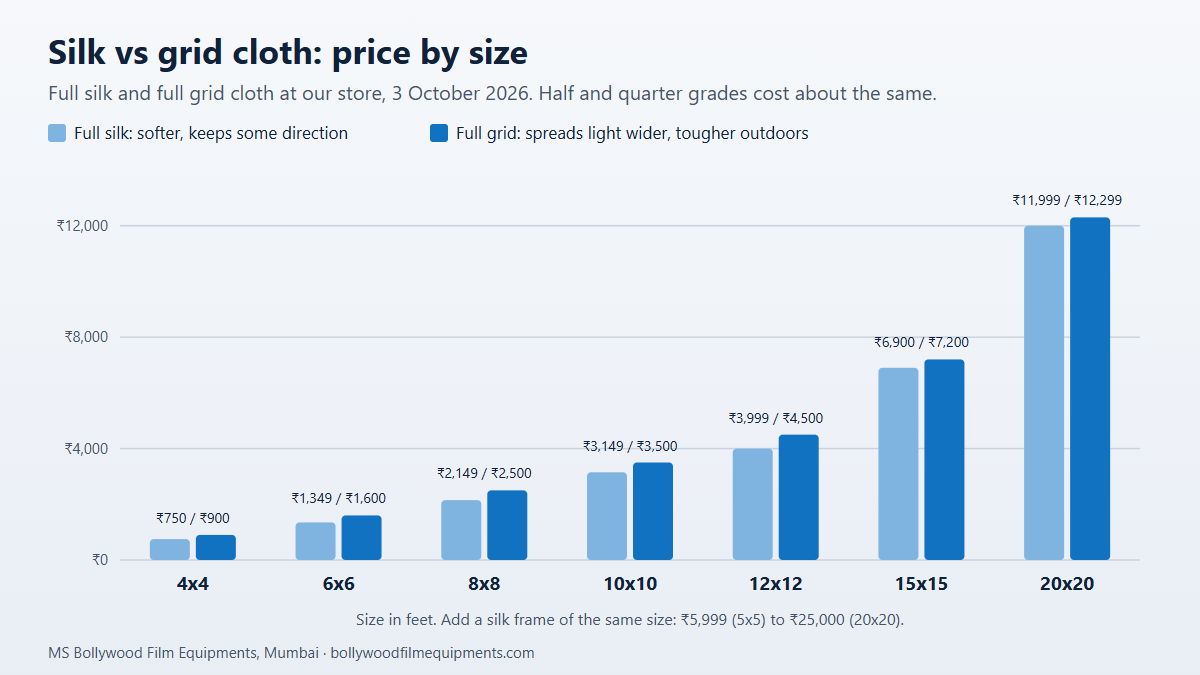
At our store, a 4×4 cloth costs from ₹750 and a 12×12 from ₹3,500. Prices in this guide are from 3 October 2026.
What is grid cloth?
Grid cloth is a ripstop-style diffusion fabric: woven with a square grid of heavier threads that stops tears from spreading. It is the diffusion most crews choose for large frames outdoors, because it holds up to wind and handling. Light passing through it spreads widely, so it gives a soft, even, wrapping light. It is also used as a bounce: light aimed at a white grid cloth reflects back as a large, soft source.
Grid cloth comes in full and half grades at our store. Full grid diffuses more; half grid lets more light through for a lighter softening.
What is silk diffusion?
In film lighting, "silk" means a fine diffusion fabric (today usually synthetic, not real silk). It softens and smooths a light but diffuses less broadly than grid cloth, so the light keeps a little more shape and direction. That suits faces and products where you want soft light that still models the subject.
Silk comes in full, half and quarter at our store. Quarter silk takes the edge off hard light while keeping most of its brightness; full silk gives the strongest softening.
Silk vs grid cloth at a glance
| Silk | Grid cloth | |
|---|---|---|
| Fabric | Fine, light | Heavier woven fabric with a reinforcing grid |
| Look | Soft, keeps some direction | Softer and more spread out, wraps around the subject |
| Outdoors | Fine in calm conditions | Better in wind; more durable |
| Also used as | – | A bounce surface |
| Grades at our store | Full, half, quarter | Full, half |
| Light loss (full grade) | About one stop, per our listing | About one stop, per our listing |
| 12×12 price at our store | ₹3,500 to ₹4,000 | ₹4,200 to ₹4,500 |
Full, half and quarter: which grade?
- Quarter silk: the lightest touch. Use it to soften direct sun on a face or take the hardness off an LED without losing much brightness.
- Half silk / half grid: the everyday choice. Clearly softer light with a moderate loss of brightness.
- Full silk / full grid: the strongest diffusion, for the softest light, or for cutting harsh midday sun over a whole scene. Our full silk and full grid listings put the light loss at about one stop, so you may need to open the lens or add light.
If you can only buy one, a half grade in the size of your frame covers the most situations.
What size do you need?
Choose the cloth to match your frame, and the frame by what you are lighting:
- 4×4 and 6×4: one face in a close-up or interview, held on a stand.
- 6×6 and 8×8: head-and-shoulders and two-person shots; the most common size for small crews.
- 12×12: a full figure or a group, and the standard size for softening sun outdoors.
- 15×15 and 20×20: wide shots and large sets. These need heavy stands, sandbags and a crew to fly safely.
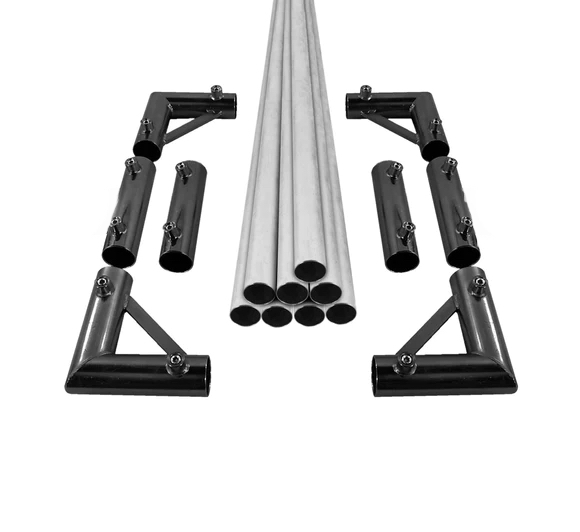
A silk frame holds the cloth flat. At our store, aluminium-and-steel frames run from ₹5,999 (5×5) to ₹25,000 (20×20), with a 12×12 at ₹11,999. See all silk frames.
Prices by size
Store prices on 3 October 2026, per cloth:
| Size | Full silk | Half silk | Quarter silk | Full grid | Half grid |
|---|---|---|---|---|---|
| 4×4 | ₹750 | ₹750 | ₹800 | ₹900 | ₹850 |
| 6×6 | ₹1,349 | ₹1,300 | ₹1,400 | ₹1,600 | ₹1,450 |
| 8×8 | ₹2,149 | ₹2,050 | ₹2,100 | ₹2,500 | ₹2,200 |
| 10×10 | ₹3,149 | ₹3,000 | ₹3,100 | ₹3,500 | ₹3,200 |
| 12×12 | ₹3,999 | ₹3,500 | ₹4,000 | ₹4,500 | ₹4,200 |
| 15×15 | ₹6,900 | ₹6,500 | ₹6,900 | ₹7,200 | ₹7,000 |
| 20×20 | ₹11,999 | ₹11,500 | ₹12,000 | ₹12,299 | ₹12,000 |
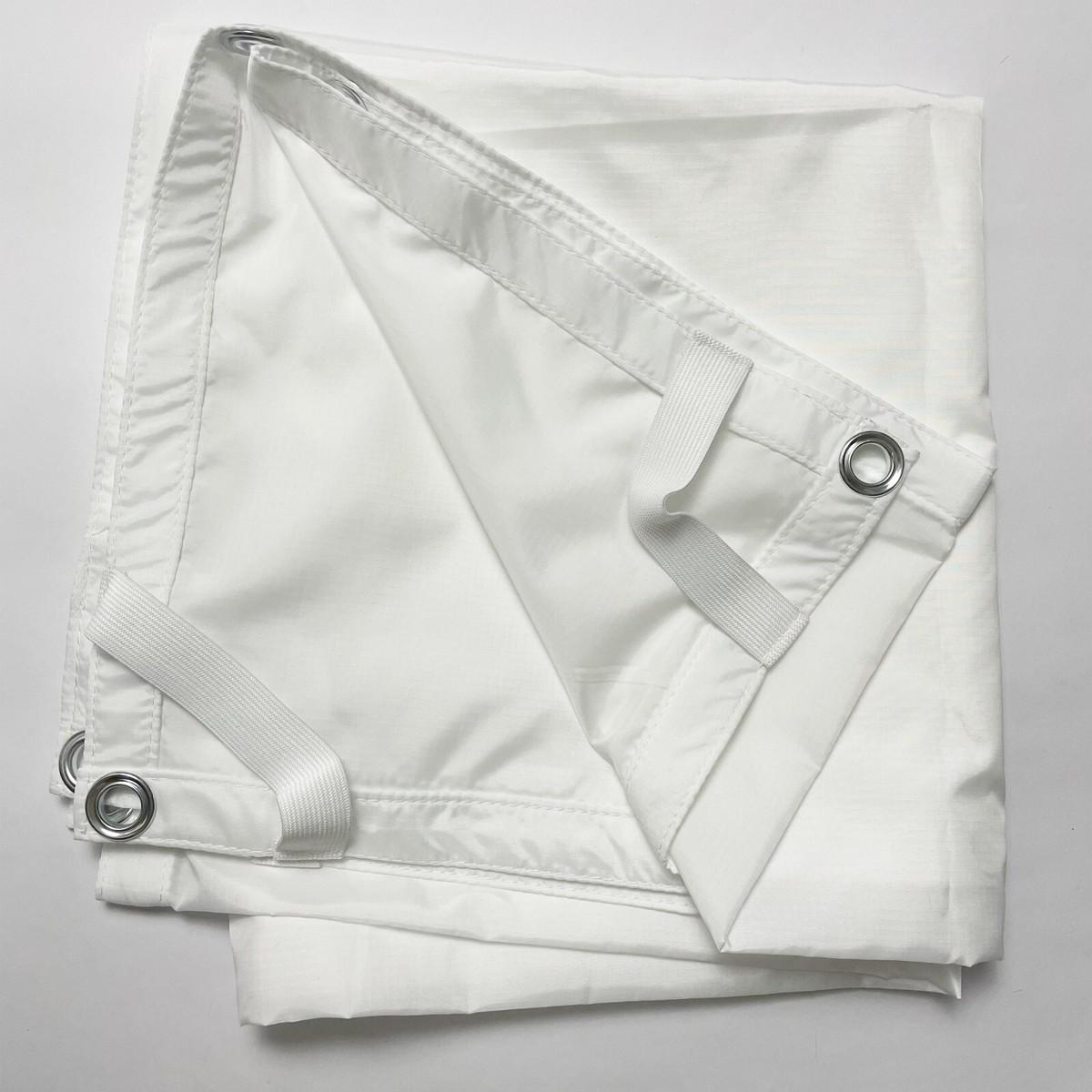
Each cloth has reinforced edges and corner ties to fit a frame of the same size. Browse the full range of skimmer and diffusion cloth.
Silk or grid cloth: which should you buy?
- Shooting outdoors, often in wind, or using it as a bounce too: grid cloth.
- Softening a light on faces or products while keeping some shape: silk.
- Only a light softening of sun or LED: quarter silk.
- Not sure: half grid in the size of your frame.
Diffusion cloth works with any light. On an LED, a frame of cloth between light and subject gives a bigger, softer source than a small softbox. See our guide to LED lights for film shooting for lights to pair it with.
Frequently asked questions
What is the difference between silk and grid cloth?
Both are diffusion fabrics that soften light. Silk is finer and keeps some of the light's direction; grid cloth is a heavier woven fabric that spreads light more widely and stands up better to wind and outdoor use. Grid cloth also works as a bounce.
What does full, half and quarter mean?
They describe how dense the diffusion is. Full diffuses most and cuts the most light, half is moderate, and quarter is the lightest. Our full silk and full grid listings put the light loss at about one stop.
What is grid cloth used for?
Softening sunlight or film lights over a subject, usually on a silk frame, and as a large white bounce. It is the common choice outdoors because it is durable and handles wind better than silk.
What size silk do I need?
Match it to your frame and shot: 4×4 or 6×4 for a single face, 6×6 or 8×8 for head-and-shoulders and small crews, 12×12 for a full figure or softening sun outdoors, and 15×15 or 20×20 for wide shots and large sets.
How much does grid cloth cost in India?
At our store, full grid cloth costs ₹900 for 4×4, ₹2,500 for 8×8, ₹4,500 for 12×12 and ₹12,299 for 20×20. Half grid costs a little less at each size.